Admiral Jayanath Colombage Participated in Korea-Sri Lanka-Australia-France Maritime Security Forum
Time: 2026-11-17 Author: RCAS
The Korea-Sri Lanka-Australia-France Maritime Security Forum aimed to facilitate policy-oriented dialogue on emerging maritime security challenges in South Asia and explore opportunities to exchange perspectives on international law, maritime disputes, and regional cooperation. The Forum brought together experts and relevant stakeholders from Korea, Australia, France, and Sri Lanka to promote a better understanding of emerging maritime security issues and explore practical avenues for enhanced cooperation. The event was held on 16th November at the regional Centre for Maritime Studies (RCMS) at Sir John Kotelawala Defence University.
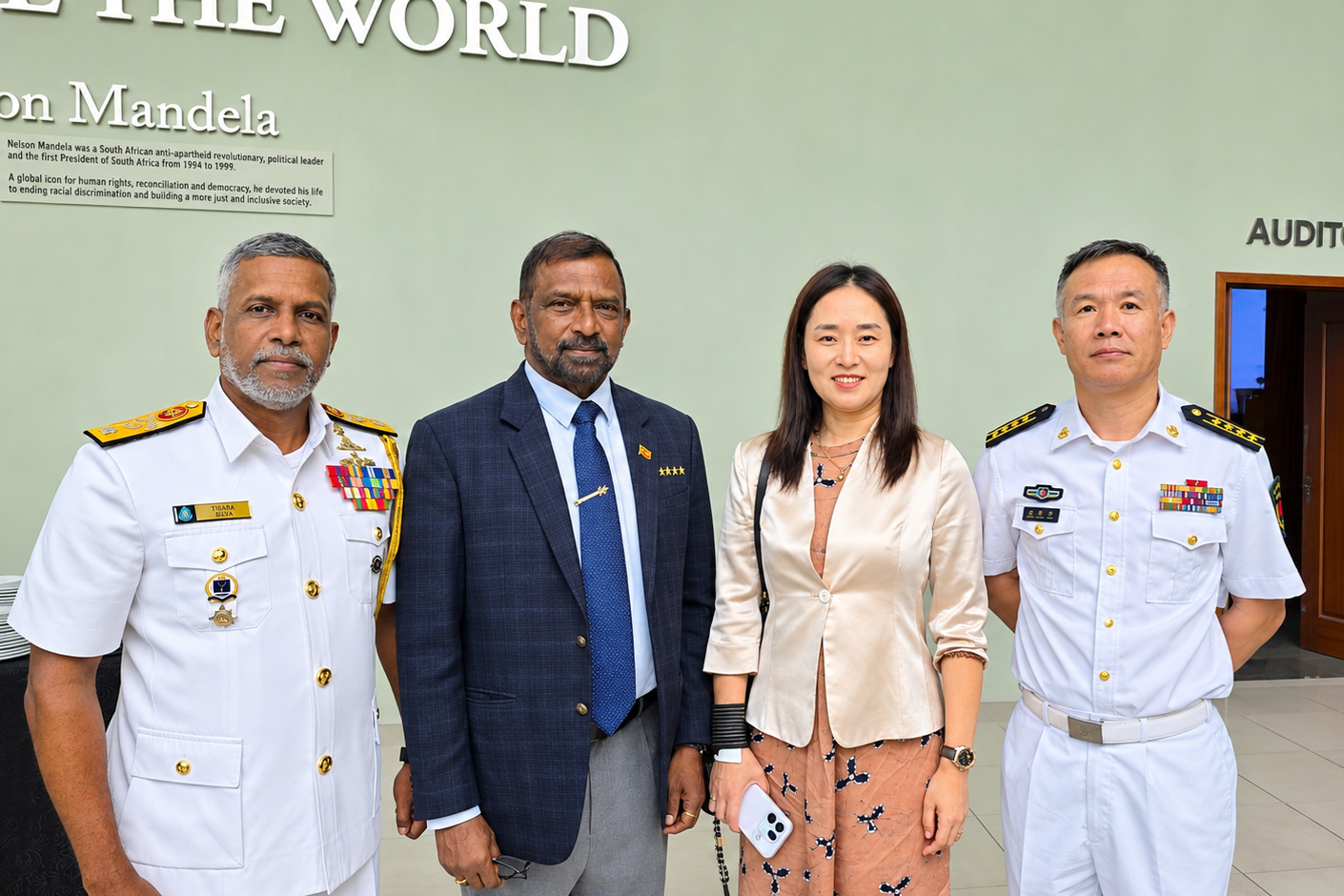
Admiral Prof. Jayanath Colombage, a Non-resident Senior Fellow of Hong Kong Research Center for Asian Studies, moderated the first session on Understanding Maritime Security and Emerging Trends in South Asia. Dr Lim Byung-ho, Associate Research Fellow at the Korea Maritime Institute and Dr Harinda Vidanage, Director of the Centre for Strategic Assessment were the panellists.
Admiral Colombage opening the session highlighted the strategic importance of South Asia's maritime geography at the central location in the Indian Ocean and proximity to major Sea Lines of Communication. Stressing on the Changing geopolitical and security environment he mentioned that increasing naval presence, strategic partnerships, and maritime infrastructure development have resulted in the emergence of a Maritime Cool War. 3. Traditional and emerging maritime threats. There are threats to maritime security from piracy, maritime terrorism, narcotics trafficking, human smuggling, and IUU fishing as well as cyberattacks, undersea cable vulnerabilities, unmanned systems, and hybrid or grey-zone threats. Spillover effects of instability in the Red Sea and Persian Gulf on South Asian economies is a major concern.
Maritime security is now shifting from platform-centric security towards intelligence-driven maritime security. Satellite surveillance, AIS, coastal radar networks, drones, and artificial intelligence are increasingly used in Maritime Security. Maritime security cannot be separated from economic security, environmental and human security. Maritime security is much more than naval security. Protection of the Blue Economy and critical maritime infrastructure are major components of Maritime Security.
Admiral Colombage concluded stating that, the future of maritime security in South Asia should not be defined by the number of warships deployed or the intensity of geopolitical competition. It should be measured by our collective ability to keep sea lanes open, protect maritime resources, strengthen maritime awareness, uphold international law, and transform the Indian Ocean into an ocean of peace, stability, and shared prosperity.