Trump in Beijing: Tehran, Taiwan, or Tariffs?
Time: 2026-05-20 Author: Sujit Kumar Datta
The whole world watched when U.S. President Donald Trump visited Beijing. On the surface, it was merely another meeting point of the two world economic powers. But the diplomatic ceremony is only a veneer over a much more serious geopolitical reality. Trade is no longer the only basis for Sino-US relations. Some of the problems that are still burning hot in the relationship now are the tariffs, Taiwan and Iran. Each issue is a different aspect of world politics. Iran represents the Middle East’s problems of war and instability, Taiwan is Asia’s most volatile geopolitical hotspot, and tariffs are a sign of economic competition between the global economic powerhouses. The three have not only affected Sino-US relations but also the stability of the international order.
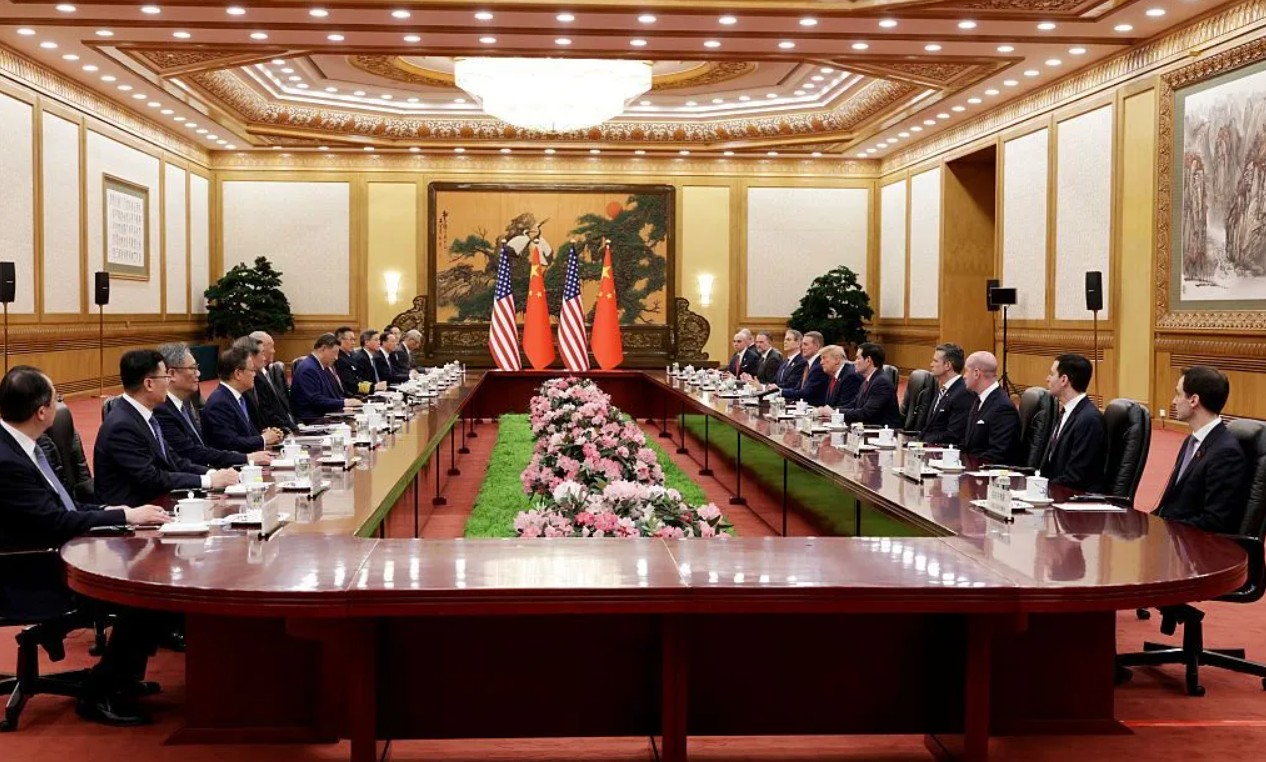
▲Times of Bangladesh.
The Iran issue is the largest issue facing us. Now, the United States seems to be keener to get out of the growing crisis in Tehran safely. Washington has learned over the years that a prolonged state of instability and conflict in the Middle East is hugely expensive economically and politically. The conditions of uncertainty in oil markets, the disruption of global shipping routes, and the potential for an escalation between the countries may cause further damage to the already fragile global economy. This is where China can help in making a significant contribution to mediation. China maintains a relatively stable relationship with Iran and has strong economic ties with the Arab Gulf countries, whereas the US has withered relationships with both countries. Beijing’s diplomatic efforts to guide Saudi Arabia and Iran closer together proved the Chinese authorities’ success in turning this country into more than just an economic player in the Middle East, but into a geopolitical stakeholder.
Cooperation with China might be necessary for the US if it is serious about de-escalating the Iran crisis. With its diplomatic, economic and political means, Beijing has more options in the area than Washington. The two countries would be better off with a peaceful, secure and stable Middle East, particularly at a time when the world economy remains vulnerable to energy price shocks and supply chain disruptions.
The Taiwan issue is the toughest for the stability of Sino-US ties. Taiwan is a matter of pride for China, far more than a territorial issue. This is a question of sovereignty, national unity and historical rights. The Chinese government has long said that Taiwan is a part of China. Beijing considers Taiwanese independence to be ‘direct interference in China’s affairs.’ President Xi Jinping has repeatedly stated in his talks with the U.S. that the Taiwan question is the most crucial and sensitive issue in Sino-US relations. Beijing views support for ‘Taiwan independence’ as a challenge to the foundation of its relationship with the US in international politics and diplomacy, and as a threat to regional peace.
American weapons sales are seen as an outside provocation to separatist tendencies in China. A new arms package further stokes tension between Beijing and Washington. As far as China is concerned, the US needs to be more sensitive towards Taiwan, and they need to be more careful with its Taiwan policies to reduce tensions across the Taiwan Strait. The U.S., however, views Taiwan strategically. Washington considers Taiwan an important democratic partner and a key player in the Indo-Pacific power balance. Pro-US-Taiwan advocates argue that beefing up Taiwan’s ability to defend itself will help keep the region stable and deter.
The danger is that if either side makes a mistake, it may turn into a war between the two countries. No war would break out that would be confined to the Taiwan Strait. Taiwan is right in the middle of the semiconductor industry, as the Taiwan Semiconductor Manufacturing Company produces many of the world’s most advanced semiconductors. These semiconductors are critical to today’s economies in artificial intelligence, military applications, cloud technologies, smartphones, and industrial manufacturing. A conflict in Taiwan, in turn, could thus lead to unprecedented global economic disruption.
The third issue that’s of great importance is tariffs and the trade war. In one of the biggest economic battles of modern history, the US and China have introduced new tariffs and restrictions against one another in recent years. The trade war was originally touted as a measure taken to eliminate trade imbalance and safeguard local industries. But its impact has been far-reaching beyond the bilateral trade data. However, the world has undergone significant changes since the early phase of the trade war. China now has a much firmer footing in several key areas. China has strengthened its global economic cooperation through its membership in the Belt and Road Initiative and greater engagement with the Global South in international trade. Even though Western economies have diversified their industrial supply chains, China continues to play a key role in them in manufacturing.
China is making significant strides in emerging technologies, including AI, green technologies, and digital infrastructure. In some key areas, Chinese firms are now in the middle of the Western innovation process and starting to supplant Western systems. Furthermore, China has significant power because it controls the world’s rare earth reserves and processing capacity. But Beijing has significant leverage over the world’s rare-earth supply if it gets into a long-term tussle.
The new dynamic has created a situation in which it is impossible for Washington to go to China as an economic power. These days, the idea of China as ‘the world’s factory’ is out of fashion. If the conflict between the two nations escalates, it will have devastating consequences in China and the U.S. as well as for the international system.
The world economy is still tightly knitted. The lifeblood of American consumers is Chinese manufacturing. The stability of global markets and international trade is an important factor in China’s development. The stability and confidence of the international markets rest on the cooperation between the world’s two biggest economies. Devastating global consequences of a long conflict: loss of growth, disruption of supply chains, military tensions, technology and geopolitical polarisation.
The US should not be a knee-jerk sanctions or containment response against China, a second-class citizen. China has become so firmly entrenched in the 21st-century world order through its economic, technological, and geopolitical power that it is difficult to see it ever changing. China must also realise that it must be reassuring, transparent and handle crises responsibly to keep its trustworthy position in the world.
Lastly, there is a correlation between Tehran and Taiwan, and between tariffs and broader political change worldwide. The world is going from unipolar to multipolar. How Washington and Beijing handle the transition will define the next few decades, shaping cooperation or conflict. However, if there is a more stable relationship between the two countries, global trade will improve, geopolitical uncertainty will decrease, financial stability will increase, and the risk of military conflict will decrease.
An unstable relationship can result in an unstable world, an economic crisis and an arms race for danger. There are rough seas ahead for the large ship of Sino-US relations. It may end up in a safe harbour or brush up against geopolitical storms that will shape the global system’s destiny.
This article was first published at Times of Bangladesh, Bangladesh, May 19, 2026, https://tob.news/trump-in-beijing-tehran-taiwan-or-tariffs/.
 <RCAS Commentary-Trump in Beijing: Tehran, Taiwan, or Tariffs>