Sino-US Relations In The Shadow Of Taiwan
Time: 2026-05-20 Author: Sujit Kumar Datta
Taiwan is only an island. Though today, it may very well be the deadliest place on earth. In one single geographical location, China and the USA meet head-on, nuclear deterrence, semiconductors, maritime supremacy, nationalism, technological rivalry, and the future of the global economy all intersect.
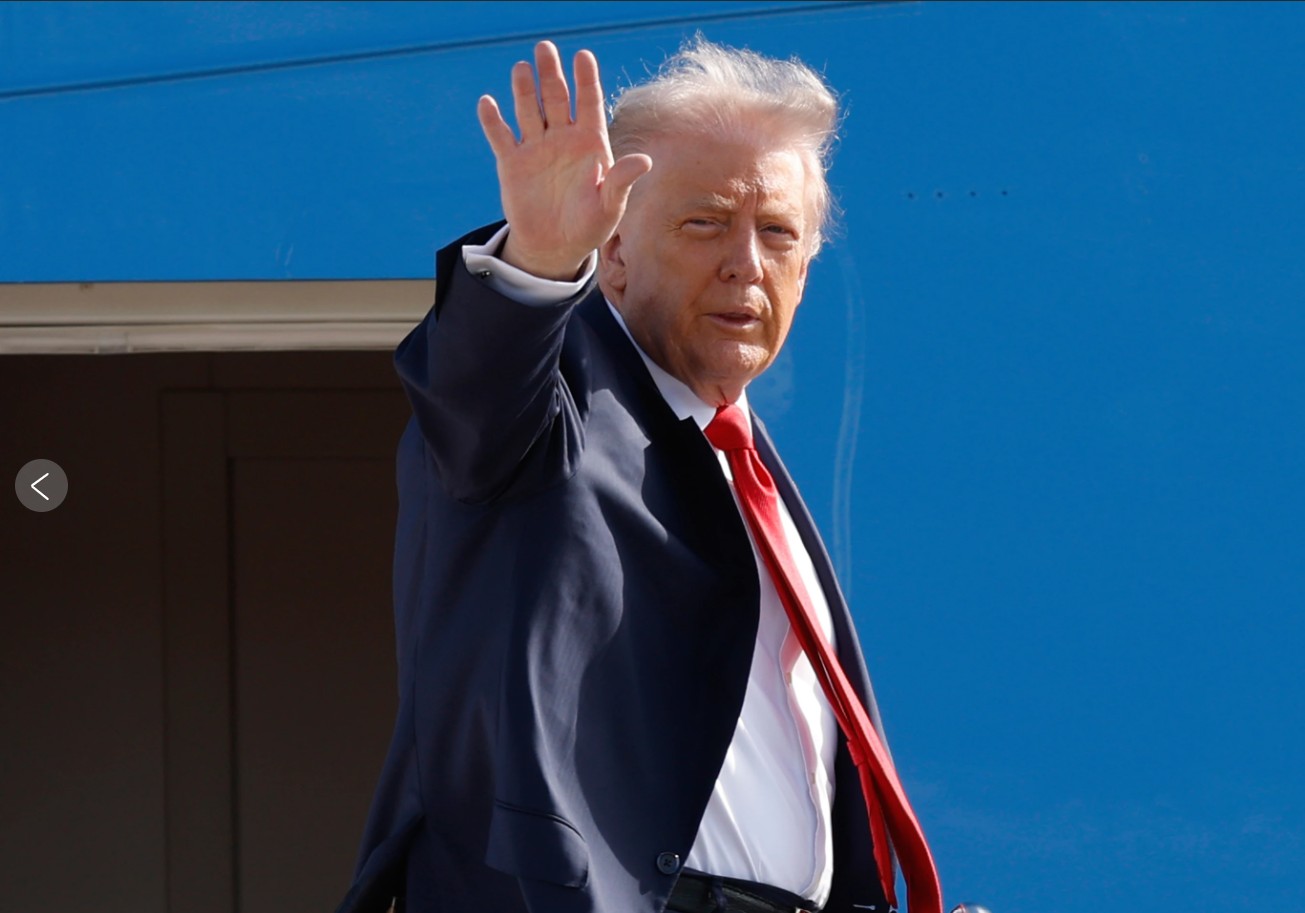
▲AP News.
For this reason, Taiwan is the center of Sino-U.S. relations today. During recent talks on the sidelines of the Beijing summit, Chinese President Xi Jinping highlighted Taiwan as “the most important issue in China-U.S. relations.” If both countries manage to address the issue properly, bilateral relations may enjoy overall stability; otherwise, clashes or even conflict may threaten the relationship.
The statement was no ordinary diplomatic cliché. They succeeded in documenting the reality that Taiwan has become the most fluid border in today’s world. Meanwhile, U.S. President Donald Trump reiterated that the “two great powers” in the world are the U.S. and China, which can “do a lot of big and good things” to bring “stability and prosperity” to the world. Trump’s remarks were encouraging on cooperation, economic ties, and personal diplomacy with Xi Jinping. However, under the glitter and pomp, there’s something hard to hear: maybe the future of Sino-US relations will not be determined in Washington or Beijing, but across the Taiwan Strait.
To grasp the tremendous impact Taiwan has on the world, it is important to understand history. The roots of the crisis go back to the year of 1949, when the Communists and the troops of Mao Zedong in mainland China finally triumphed in the Chinese Civil War, and the government of the Republic of China transferred to Taiwan. Ever since, there has been a division between two political systems, those of the People’s Republic of China on the mainland and those of Taiwan’s democratic self-governing administration.
Beijing doesn’t take Taiwan as a mere foreign policy concern. It is intimately connected to sovereignty, territorial integrity, and rejuvenation of the nation. When foreigners divided and colonized the Chinese by means of unequal treaties, Chinese leaders always linked the Taiwan issue to the “Century of Humiliation”. The last book that has not been opened in this story is Taiwan. The final book that has not been opened in this story is Taiwan.
This is because the Chinese president, Xi Jinping, has been making frequent links between Taiwan reunification and the “China Dream” and the nation’s broader Chinese rejuvenation drive. For Beijing, this problem has no time limits. This is also a concern that Xi has expressed, can’t wish to “pass down “generation after generation. Peaceful or forced reunification, Beijing believes that unification is a mission of history, not just a policy option.
The Taiwan issue is especially perilous due to this ideological aspect. Compromise is very hard if sovereignty is equated with national identity and historical legitimacy.
However, Taiwan has a different meaning to the United States. Washington’s interest is not confined to the island but extends to the overall power dynamic in the Indo-Pacific as well. Taiwan is currently in the middle of the “First Island Chain” from Japan through Taiwan to the Philippines. In effect, this is a geography of the sea that helps limit China’s naval presence in the Pacific Ocean.
The strategic situation in Asia could change completely if Beijing were to take control of Taiwan. China would control the Pacific; the United States’ supremacy would be challenged as much as ever; and America’s network of alliances in the Pacific could become psychologically and strategically weakened. That means Taiwan is more than just a Washington ally; it’s a critical component of America’s Indo-Pacific security strategy.
However, one overlooked aspect of the Taiwan issue is its technological implications. Taiwan Semiconductor Manufacturing Company (TSMC) is the world’s leading semiconductor manufacturer. Today’s semiconductors are used in everything from artificial intelligence to smartphones to satellites to missiles to data centers to military systems.
Therefore, it wouldn’t be a regional military war if there were a big conflict over Taiwan. It could trigger a technological and economic disaster worldwide. The supply chain would be disrupted, shipping lines would be affected, markets would go into a panic, and global inflationary pressures would build. This would impact not just China and the USA but also India, Japan, Europe, and the global economy.
As a result, many analysts consider Taiwan to be “the world’s most dangerous flashpoint.” The situation is complicated by Washington’s policy on Taiwan. United States policy (under “One China Policy”) is that the only legitimate government of China is the government in Beijing. Meanwhile, however, Washington’s unofficial relationships with Taiwan, which it sells arms to and backs under the Taiwan Relations Act, remain.
This is what is referred to as “strategic ambiguity”. The U.S. does not make it clear whether or not it will provide military assistance to Taiwan if it is attacked by China. This purpose is strategic, as it would embolden Beijing to use force if Washington justifies its refusal to defend the island, but it would embolden other political forces in Taiwan toward formal independence if it decided to intervene.
So, the idea of strategic ambiguity is to make it less appealing for the Chinese to pursue further annexation of Taiwan, but not less appealing for Taiwan to declare independence unilaterally. But as the pressure mounts, it can become hard to keep this balance.
The other key factor is Taiwan’s changing identity. Taiwan has developed a unique democratic political culture over the past few decades, and a sense of local identity is growing stronger. The younger generations are more likely than ever to identify as “Taiwanese” rather than “Chinese.” This change in mentalities is worrying for Beijing because it has been working hard to control territory, which does not necessarily translate into political allegiance and national integration. The Taiwan issue is undergoing transformation in many aspects, and time is the agent. As political divisions continue, it will become increasingly difficult to bring them together peacefully.
The most terrifying question, however, is what would happen if there were a war? The possibility of conflict begins with naval blockades, cyberattacks, missile strikes, and/or attempts to economically isolate Taiwan. Anti-ship missile systems, reserve mobilizations, anti-ship cyber defense, and asymmetric warfare will likely be used as countermeasures in the event of a Taiwan retaliation. But Taiwan’s military power is still far behind China.
The last question that needs to be answered is the issue of American involvement. Would Washington be directly involved in the fight? Would it offer just intelligence and logistical support? Would there be any intervention from partners in the region, such as Japan, Australia, or the Philippines? One can only hazard guesses about the answers to these questions. This uncertainty, in and on its own, increases the risk of miscalculation.
The implications for Asia are huge. If the Taiwan conflict happens, it will become a geopolitical arena in the Indo-Pacific. An energy disruption could occur, the global trade would be impacted, and the militarization in the region would rise. A country such as India would be in a serious strategic predicament if it had to maintain its border security while also monitoring its economic stability through supply chains and diplomacy.
However, there is no “necessity” of conflict, even in light of these dangers. This is the place to watch Xi Jinping’s message in its entirety. In his statements, Xi raised several profound questions: Will there be any way to prevent China and the United States from falling into the “Thucydides Trap”? Are they capable of developing another form of big power relations? Are they able to work together to solve problems worldwide and make humanity more stable? These questions are the geopolitical ones of the times.
When power is rising, there will be a clash between the rising power and the established powers, as history shows. But history doesn’t have to be predetermined. Whether it is controlled by both sides or gets out of hand, causing nationalism, distrust, and a potential military arms race whose impact may harm Sino-US relations, remains to be seen. Taiwan remains the most perilous indicator of this.
To make the Taiwan Strait peaceful, not just a Chinese or an American concern, but a world concern. Responsible statecraft by Beijing and Washington is critical to technological security and regional peace and stability in the world’s economy. Both have to face the same difficulty: not to die in the conflict, not to go to war with China, not to lose the big war over Taiwan in a world full of nuclear weapons and economic interdependence. The fate of Sino-US relations and even the stability of the twenty-first century may depend on whether they do or don’t.
This article was first published at Eurasia Review, USA, May 15, 2026, https://www.eurasiareview.com/15052026-sino-us-relations-in-the-shadow-of-taiwan-oped/.
