

Bangladesh Seeks Chinese Investment to Deepen Strategic Partnership
Time: 2026-05-14 Author: Sujit Kumar Datta
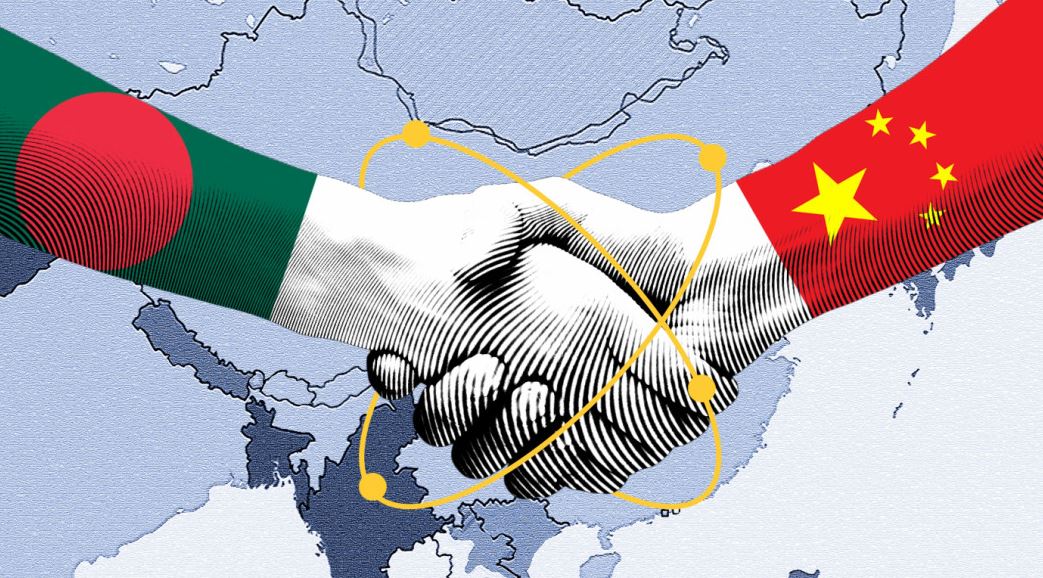
For the first time in its history, China has re-emphasised political and economic issues in Bangladesh, reflecting the drastic change in the country’s foreign policy attitude after the launch of the ‘Bangladesh First’ policy. In Dhaka, this entails working on national development, economic security, and autonomy in international affairs. The geopolitical landscape, economic, and infrastructure requirements continue to evolve worldwide, and Bangladesh is seeking a partnership to address its urgent needs. This high-level meeting is a diplomatic event, being held in Beijing, with the foreign ministers of both countries, viz. Khalilur Rahman and Wang Yi. They have become a symbol of the ‘realistic option’ in Bangladesh for achieving economic benefits from strategic partnerships.
▲IISS.
Bangladesh’s demand for greater Chinese investment in priority infrastructure projects, particularly the long-talked-about Teesta River Comprehensive Management and Restoration Project (TRCMRP), was at the heart of these talks. The Teesta issue in Bangladesh is not only about water but also about food security, agricultural production and productivity, disaster preparedness, and regional economic development. A comprehensive restoration project may enhance irrigation systems, support the livelihoods of the local population, and reduce vulnerabilities to climate impacts. Dhaka’s move to open the gates to Chinese involvement in the project is an indication that it is ready to accept partners that can help fund large infrastructure projects and provide expertise.
China’s reaction is positive, in keeping with its general policy, aimed at strengthening its economic and political ties in the South Asian region. Wang Yi’s remarks that China is prepared to ‘show flexibility and sincerity’ in pursuing BRI cooperation with Bangladesh’s development goals echoed China’s view of Bangladesh as a key partner in the region. Greater cooperation with China strengthens regional connectivity, trade routes, and sea lanes, as well as China’s presence in the Indian Ocean in Bangladesh’s case.
Geopolitics isn’t the only lesson to be learned from Bangladesh’s ties with China, however. In the current price-driven economic pragmatism, Dhaka’s main approach is. The ‘Bangladesh First’ policy has been balanced, and in it, the role of Bangladesh in maximising the national benefits has been well worked out without any single power being the sole power. In recent years, Bangladesh has also enhanced cooperation with countries in the Middle East, India, Japan, and the USA, in addition to China. Dhaka’s drive for diversifying its economy and its strategic engagements to safeguard its long-term interests are clear signs of the city’s efforts to reach out to both the West and China in a multi-directional approach.
The focus on attracting Chinese capital into sectors such as infrastructure, water, the digital economy, and green development is especially notable. For Bangladesh to achieve its target of becoming an upper-middle-income country, it must invest substantially in connectivity, industrial modernisation, energy transition, and technology development. Chinese companies have experience in completing mega infrastructure projects and in growing the manufacturing sector, and could play a vital role in advancing Bangladesh’s development goals. Chinese investment in these sectors could yield significant economic benefits, including roads, rail, ports, digital infrastructure, renewable energy, and industrial parks.
In the meantime, Bangladesh will be communicating to foreign investors to create a ‘stable, sound and predictable’ business climate. Some problems identified with international investment in Bangladesh include regulatory issues, policy incoherence, and bureaucratic delays. Dhaka is seeking to create a more predictable and stable environment for investors by emphasising investor confidence and predictability in the Beijing talks. It is especially important in today’s world, with a global supply chain no longer limited to traditional manufacturing centers.
Bangladesh’s adherence to the One-China policy also has strategic significance. Dhaka’s declaration of Taiwan as part of China’s territory is in line with its traditional position. But the reaffirmation is being made at a time when Bangladesh is looking to maintain political confidence with Beijing. Economic cooperation can serve as an element of political reassurance in international politics. Bangladesh’s solid reaffirmation of its support for China’s core interests further solidifies a political ground for deepening the country’s economic and security relationship.
The opportunities presented by Chinese financing are vast, but the issues of sustainability, transparency, environmental impact, and strategic dependency are not to be overlooked. Experiences from other developing countries show the value of making infrastructure projects economically viable and beneficial to the country. Therefore, Bangladesh should have a transparent, clear, accountable, and well-negotiated investment framework, free of short-term political concerns and based on national interests.
This is where the spirit of the ‘Bangladesh First’ policy comes in the most. Foreign investment cannot be at the expense of strategic autonomy. Instead, it should be through external partnerships to speed up domestic development whilst maintaining the ability to make sovereign decisions. Projects must be evaluated based on their economic, environmental, and social impacts, with consideration of their long-term benefits to Bangladesh. The investments in infrastructure should not impose an unsustainable financial burden, but should contribute to national industrialisation, employment creation, regional connectivity, and technology transfer.
The talks also highlight the ‘multiplicity’ of Bangladesh’s relations with China on the Rohingya issue and regional stability. Beijing has shown its willingness to be a regional mediator by supporting further talks between Bangladesh and Myanmar. The Rohingya situation is not only a human rights and humanitarian issue but also a national security issue for Bangladesh. A China that continues to play a role in the region might thus help stabilise the situation, but this will require continued diplomatic pressure and cooperation among all actors.
The two countries’ mutual embrace of multilateralism, peaceful resolution of disputes, and the United Nations Charter is also significant. Bangladesh’s foreign policy is apparently oriented towards pursuing the strategic flexibility and rule of law in the polarised geopolitical and protectionist world. The balance enables Dhaka to interact with the big powers without being taken aback by the exclusive alliances or the competitive blocs.
However, to make the partnership successful, Bangladesh needs to take note of the need for ‘balance’ and ‘transparency’ and find a way to make its development agenda ‘national owned’ in the process. The ‘Bangladesh First’ policy should be based on the interests of the country, building economic resilience and inclusive development of the people. China’s investment is a good opportunity for Bangladesh’s future, but to take advantage of it, Bangladesh should be at the negotiating table with a strategic approach and confidence. The current global dynamics pose challenges for Bangladesh, not only in attracting (and retaining) investment but also in serving as a vehicle for country-led development while retaining national sovereignty, stability, and strategic independence in the long run.
This article was first published at Times of Bangladesh, Bangladesh, May 12, 2026, https://tob.news/bangladesh-seeks-chinese-investment-to-deepen-strategic-partnership/.
 <RCAS Commentary-Bangladesh Seeks Chinese Investment to Deepen Strategic Partnership>