

Climate Education As National Security in Bangladesh
Time: 2026-05-14 Author: Sujit Kumar Datta
Bangladesh is on the front line of one of the most important security questions of the 21st century. Increased sea levels, severe cyclones, salinity intrusion, and erratic weather patterns are no longer distant environmental issues but immediate threats to livelihoods, infrastructure, and human life. In this respect, climate education must be restructured not as a subject in an academic curriculum but as a component of national security. It is no longer a matter of choice but a necessity to ensure resilience, stability, and sustainable development.
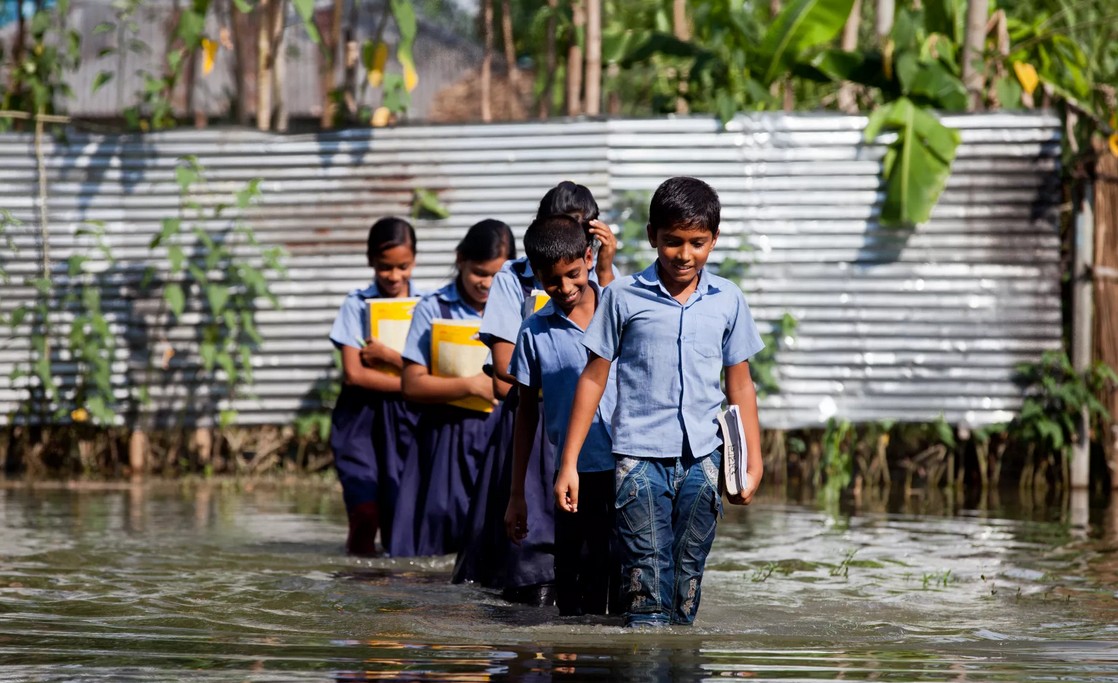
▲Times of Bangladesh.
Education Sustainable Development (ESD) is one of the major platforms through which this change can be affected. ESD equips the citizens with the knowledge and values that they need to confront a future that is more uncertain than ever. As one of the pillars of lifelong learning, community-based ESD transcends formal classrooms and embeds sustainability in everyday life and local practice. Climate change education, as the epicentre of ESD, is a matter of direct existential concern due to global warming and environmental degradation. Not only does it create awareness, but it also develops the hands-on skills required to implement adaptations and mitigation measures. The strategic importance of making ESD, climate education, and green community development central to national education systems’ policies has been recognised by institutions such as UNESCO. Such an integration is beneficial in realising the fact that sustainable development cannot be talked about in the context of uninformed and disempowered citizens.
In Bangladesh, there is a high stake, especially in this case. Being one of the most climate-vulnerable countries in the world, the country must make resilience and adaptation key pillars in its development strategy. In this respect, climate-smart education is crucial. Directly, education can help communities become more resilient by equipping students with locally relevant skills, such as disaster preparedness, sustainable agriculture, water management, and renewable energy use. This strategy goes beyond theoretical teaching, focusing on practical knowledge that can save lives and livelihoods in times of crisis.
The interdependence of climate change and education disruption further substantiates the need to make climate education a security project. Natural disasters usually destroy schools, displace people and disrupt education. The sadness of the tragedy of Cyclone Sidr that claimed the education of over 100,000 children is a bitter pill to swallow in terms of exposing the vulnerability. Such upheavals can lead to long-term reversal of development, increase inequality and hinder national development in the absence of strong infrastructure support and a flexible curriculum. Investing in climate-resilient schools – properly outfitted to withstand extreme weather – and flexible learning systems is therefore of great significance in an attempt to save the human capital of the country.
This fact is beginning to be recognised in Bangladesh’s policymaking. Plans such as the National Environment Policy 2018 and the government’s membership of the Greening Education Partnership demonstrate that the government is determined to embed sustainability and climate consciousness in the national curriculum. These are to mainstream environmental education at all levels, so that future generations will be better positioned to cope with climate change. However, the priority is to implement it successfully. The policies must be translated into concrete changes in teaching techniques, curriculum development, and resource allocation.
Strategic collaboration is also essential to promoting climate education. The fact that Bangladesh has been engaging with international partners such as UNESCO and the Global Partnership for Education is an acknowledgement that climate issues are not national. The activities, such as the Climate Smart Education Systems Initiative (CSESI), are geared toward generating evidence-based strategies and fostering innovation in education systems. Bangladesh can accelerate its efforts towards a more resilient and adaptive education system with the collective skills and resources from around the world.
The idea of the nation converting half of the educational institutions into the Greening Education Programme by 2030 is not just desirable, but also just. To achieve this target, it will involve a long-term investment, capacity building, and community interactions. It will also require a change in the philosophy of education, from learning by rote to learning by experience, through practice. It is not only that students are compelled to be informed about climate change, but also how they respond in a real-life scenario.
Ultimately, through the rhetoric of climate education as national security, the rhetoric of development and governance is re-positioned. It has revealed the interdependence of environmental sustainability, human security, and economic stability. Climate-literate citizens are better positioned to make informed decisions, adopt sustainable practices, and enhance the country’s resilience. On the other hand, a lack of awareness and preparedness can heighten vulnerability, leading to social unrest, economic disruption, and a long-term unstable situation.
Climate resilience building in Bangladesh will not be based solely on infrastructure and technology, but on people’s knowledge, attitudes and behaviours. The interface is education, which helps bridge the gap between policy aspirations and action on the ground. By investing in inclusive, comprehensive and futuristic climate education, Bangladesh will have a chance to transform its vulnerability into strength. In the process, it will not only save its future but also set an example for other nations currently facing the same predicaments.
Climate education in Bangladesh needs to be reoriented not as an environmental issue of convenience, but rather as a pillar of national security. The country’s resilience will depend on its citizens’ ability to understand, anticipate and respond to climate-related risks. A climate-literate population is better positioned to protect livelihoods, support adaptive agriculture and aid in disaster preparedness, thereby enhancing the country’s overall security architecture.
The policy action should thus not be mere rhetoric but a reality. The provision at all levels, in the form of a practically oriented form, and in the form of the locally appropriate material, should be a part of the national curriculum. Teacher training, research funding and awareness-raising campaigns should be increased in the medium term to build institutional capacity. Over the long run, Bangladesh must invest in new ecosystems of innovation that bridge the gap between education and climate technology, entrepreneurship, and policy design. It is also important to have inclusive access in the sense that the vulnerable and marginalised communities will not be left behind.
And lastly, the concept of climate education as a national security is not only strategic but also important to survival and sustainable development. It will not be just infrastructure or even policy-based in terms of Bangladesh’s future, but an informed and prepared citizenry able to cope with an increasingly uncertain climate reality.
This article was first published at Times of Bangladesh, Bangladesh, May 5, 2026, https://tob.news/climate-education-as-national-security-in-bangladesh/.
 <RCAS Commentary-Climate Education As National Security in Bangladesh>