

While America Fights, China Plans
Time: 2026-04-25 Author: Sujit Kumar Datta
The U.S., in all conventional concepts of military might, is unmatched. It can project its force to other continents, attack specifically, and form alliances in ways its rivals can never imitate. Yet this new reality of international competition is no longer defined by a military’s ability to destroy in the initial days of a war. It is also defined by a state’s capacity to survive and endure in the long run, industrially, technologically, and strategically. And in that more unseen battle, China is training itself to take a calculated patience as America continues to be caught up in multiple crises.
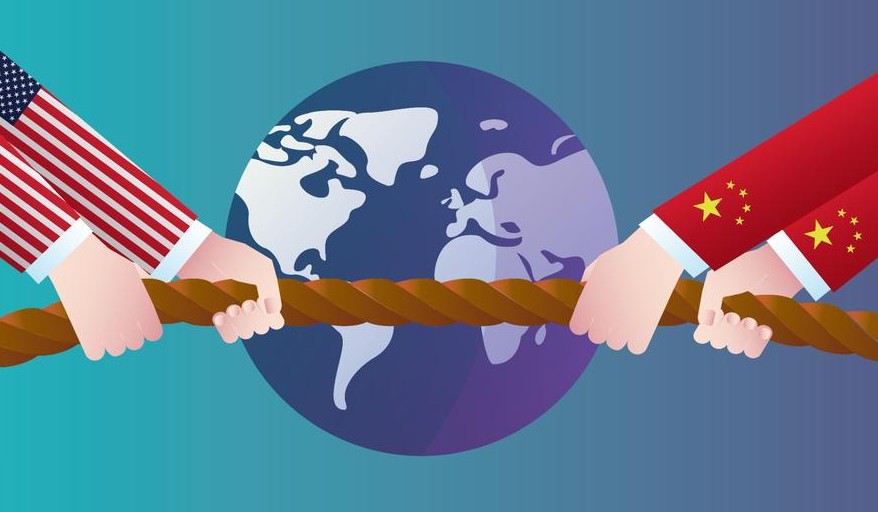
▲Times of Bangladesh.
This juxtaposition has become very evident due to the unresolved war with Iran. The potential repercussions of the U.S. military assets relocating between allies in the West Pacific to aid operations in the Gulf are far-reaching beyond the Middle East. South Korea has already resigned itself to negotiating the redeployment of some U.S. Patriot missiles, with Seoul’s leaders admitting they have little bargaining power to prevent such a move. In the meantime, the U.S. guided-missile destroyers based in Yokosuka have been diverted to war chores in Iran, and the only U.S. aircraft carrier on the high seas, the one based in the Asian ocean, is undergoing maintenance. It is not a normal logistical accommodation. It is one piece of evidence that a theatre of war may undermine deterrence in another theatre. Even the Western Pacific, which is already the field of acute strategic rivalry, feels a slight but significant shift in the balance. The deterrent margin is becoming even smaller, not because the United States is weak, but because it is being pulled. The main question is not whether Washington can subdue Iran militarily. It can, nearly certainly, so do. The real question is whether it can still have a long-term campaign in the Middle East and remain credible in deterring Asia, and whether it can replenish its exhausted inventories in time before it experiences strategic drift.
Although the United States is the second-largest producer of mined rare-earth oxides worldwide, it lacks adequate processing facilities. In particular, the U.S. remains completely reliant on imported rare-earth permanent magnets for its business operations. Still, its manufacturing can supply only a limited portion of its defense production needs. It is even more intensive in wartime, when demand is higher and political priorities shift. The Pentagon had already begun to request the mining companies to suggest how it could boost domestic production of key minerals, yttrium, scandium, tungsten and germanium, in the lead up to war in Iran. They are not abstract products; they are the raw materials for advanced weapons systems, aerospace technology, and semiconductor production.
The Iran war did not create America’s materials problem; it was already known. Military planning, industrial renewal, and mineral chain planning are highly interrelated at present. China, in turn, is dominant in this space. It accounts for a large share of global processing of rare earths and has shown a readiness to employ export controls as a strategic instrument. Recent limitations have sharply reduced exports of some materials to the United States due to price surges and shortages. One such case is yttrium, which is essential for heat-resistant finishes in jet engines and has seen its sales to the U.S. drop sharply. This has led to a decrease in activity by some North American firms.
Defense demand does not necessitate disturbance by using up all the resources in a limited environment. It is simply necessary to be first. As the military moves to the top of the queue, commercial sectors such as semiconductors and artificial intelligence are moved out. They experience delays, increased cost and uncertainty. The consequences are far-reaching. There is a further weakness in the semiconductor supply chains. Aerospace production slows. The growth of AI infrastructure, which is already a high-resource-consuming project, gets more costly and less predictable. These industries do not fall; they lose their momentum. They no longer get first on the line. As Washington is dealing with the crises at hand and the redistribution of resources among theatres, Beijing is concerned with the long-term positioning. It is investing in industrial capacity, ensuring supply chains and growing its technological base. It is planned during the American War.
This opposition can also be observed in the Asian context, particularly on the military front. The Chinese Navy is the largest in the world, with a fleet of more than 370 ships and submarines. Many of them are new, multi-mission planes intended for use in a contested environment off the coast of China. Although the United States continues to have a worldwide advantage in overall potential, its position and industrial depth put China at a considerable advantage in the immediate area.
This is also spreading to Taiwan, where there are already concerns about the potential diversion or delay of U.S.-supplied weapon systems. No such transfers have ever been demonstrated, but the mere possibility of them points to a greater fact: that action in one region casts a long shadow over strategic planning in another.
Not even diplomacy is left out. A high-level visit, which could otherwise have been seen as a normal interaction between Washington and Beijing, carries greater weight, given the ongoing war and the vulnerability of supply chains. When matters of this kind, such as rare earths and even industrial resilience, are no longer technical, but are the subject of strategic bargaining. The more we can see, the more we can see that American power is on the decline. Instead, the character of power itself is evolving. Military power is still necessary; however, it is not enough on its own. Endurance has now become the determining factor and is measured by industrial capacity, supply chain security, and cohesion within the alliance.
Instead, the United States is walking a fine line between the present and the future, preparing for the future. Its strengths include its innovation ecosystem and alliance network. It will, however, not be able to maintain its military commitments through its own industrial means and will have to become over-dependent on vulnerable supply chains; otherwise, it is likely to become a prisoner of a reactive strategy.
Ultimately, it is not about whether America can fight and win wars. Whether it can fight, maintain, and discourage at the same time in a world where power is quantified just as much by what a nation can make as by what it can ruin. As America battles, China thinks. And in the extended arc of strategic rivalry, the more decisive type of power can be planning.
This article was first published at Times of Bangladesh, Bangladesh, April 21, 2026, https://tob.news/while-america-fights-china-plans/.
 <RCAS Commentary-While America Fights, China Plans>